
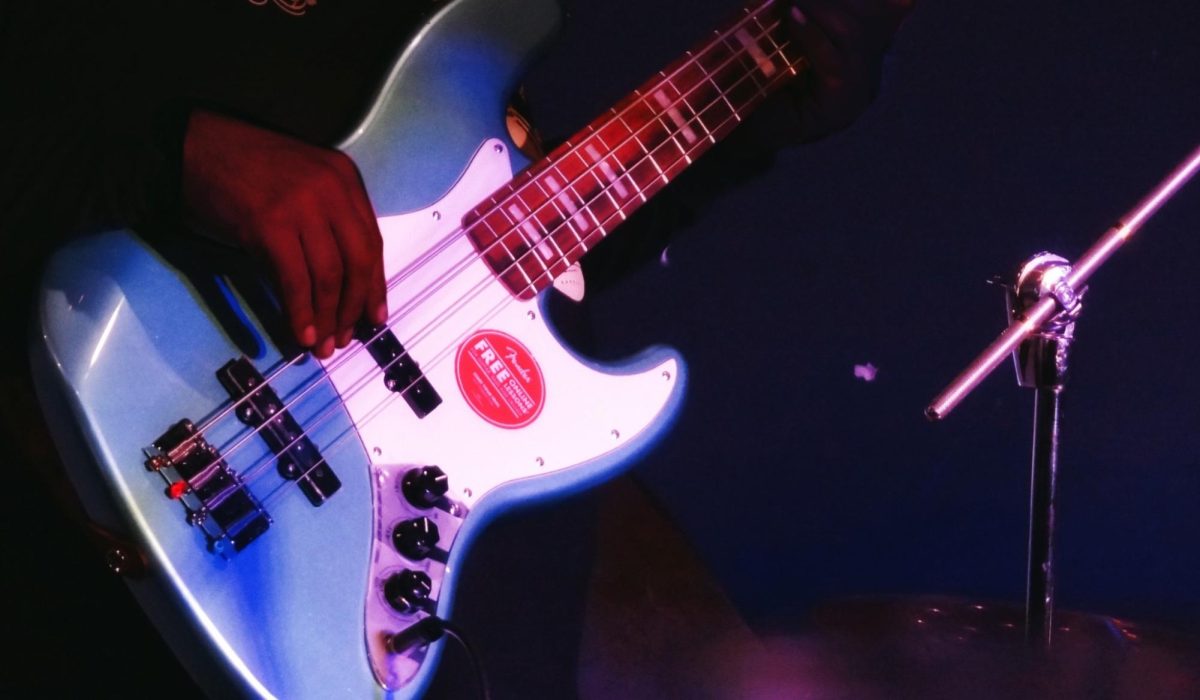
African-American culture has influenced America’s taste in music for decades now, driving the evolution of genres popular not only in America, but also across the globe.
From the blues, to jazz, to hip-hop and eventually modern rap, African-Americans brought a sense of community and expression with their music. Almost all genres came from “work songs,” songs where enslaved people used music to motivate themselves through long, hard hours out on fields.
According to the U.S. history teacher Jake Castleberry, another reason music was used during this era was for its ability “to communicate different messages across plantations.” This music was also known as “spirituals.” Because of the use of spirituals, slave owners wouldn’t be able to decipher what was being sung, enabling slaves to plan escapes or to warn others of the dangers inhabiting the Underground Railroad.
The first African-American to have music published was Francis “Frank” Johnson, a composer mainly known for writing songs during the Revolutionary or Antebellum eras. His music was published only as sheet music at the time, however, Frank Johnson was a highly successful musician that defied racial barriers and succeeded. He played at live concertos and was even featured at the grand ball honoring General Marquis de Lafayette in 1824.
Another significant period in time for African-American music was during the 1920s, or better known as the “Roaring Twenties.” Castleberry also specifies that jazz was a “product of the Great Migration,” a period in time where thousands of African-Americans moved from the rural south into the industrialized north, where opportunity and diversity flourished.
African-Americans during this time took the blues—melancholic, emotional songs with a “soulful” sound—and European orchestral music and created jazz. Popular musicians like Duke Ellington, Jelly Roll Morton or Louis Armstrong all helped in defining the jazz genre. Artists that pushed back against racial injustice and pioneered rebellious forms of music not only elevated African-American artistry, but also challenged racial stereotypes and paved the way for future artists.
Musicians and singers in the black community nearly 20 years later developed R&B, or rhythm and blues, with soul using the rhythmic structures of R&B and fusing it with the passion of gospel music. R&B is where jazz meets boogie-woogie, upbeat music that was also a product of the Second Great Migration. R&B is still popular, even to this day, with SZA and Brent Faiyaz ranking high on Top 100: USA on Apple Music.
As R&B and jazz music were steadily popularized, the 1950s and 1960s became eras of significant social change for people of color, specifically African-Americans. Gospel and folk were vital forms of communication not only in the church but also during protests as ways for protestors to calm themselves down while facing prejudice. The impact music had during this era was substantial, with American civil rights activist Martin Luther King Jr. stating that songs were “the soul of the movement” in his book Why We Can’t Wait published in 1964.
“A Change Is Gonna Come” by Sam Cooke was considered one of the most influential songs during the civil rights era because of its weary yet hopeful message of the promise that racial discrimination would end. Cooke sings, “It’s been a long, a long time comin’,” highlighting the hardships African-Americans have endured for decades.
However, through the difficulties, the black community persevered and gifted genres known and loved not only by America, but worldwide. Rock music has been around for a while now, artists like Chuck Berry and Bo Diddley being significant pioneers in the makings of rock, with Bo Diddley using the guitar in ways other musicians hadn’t thought of. The rock genre eventually grew and shifted and branched off into different areas and emotions. While aggressive punk rock music was diversifying, “Funkadelic” or psychedelic funk introduced a dreamier, slow-burning rhythm that captured global audiences.
Many American genres are derived from the African-American community in some way, shape or form. However, the common theme seen in black music through the decades is its rhythms. All genres in whatever way have an ability to speak to people, similar to how African-American music has always conveyed a message. The heartbeat of American music is the voice of the black community, consistently turning their struggles and ideas into the soundtrack of the world.
