
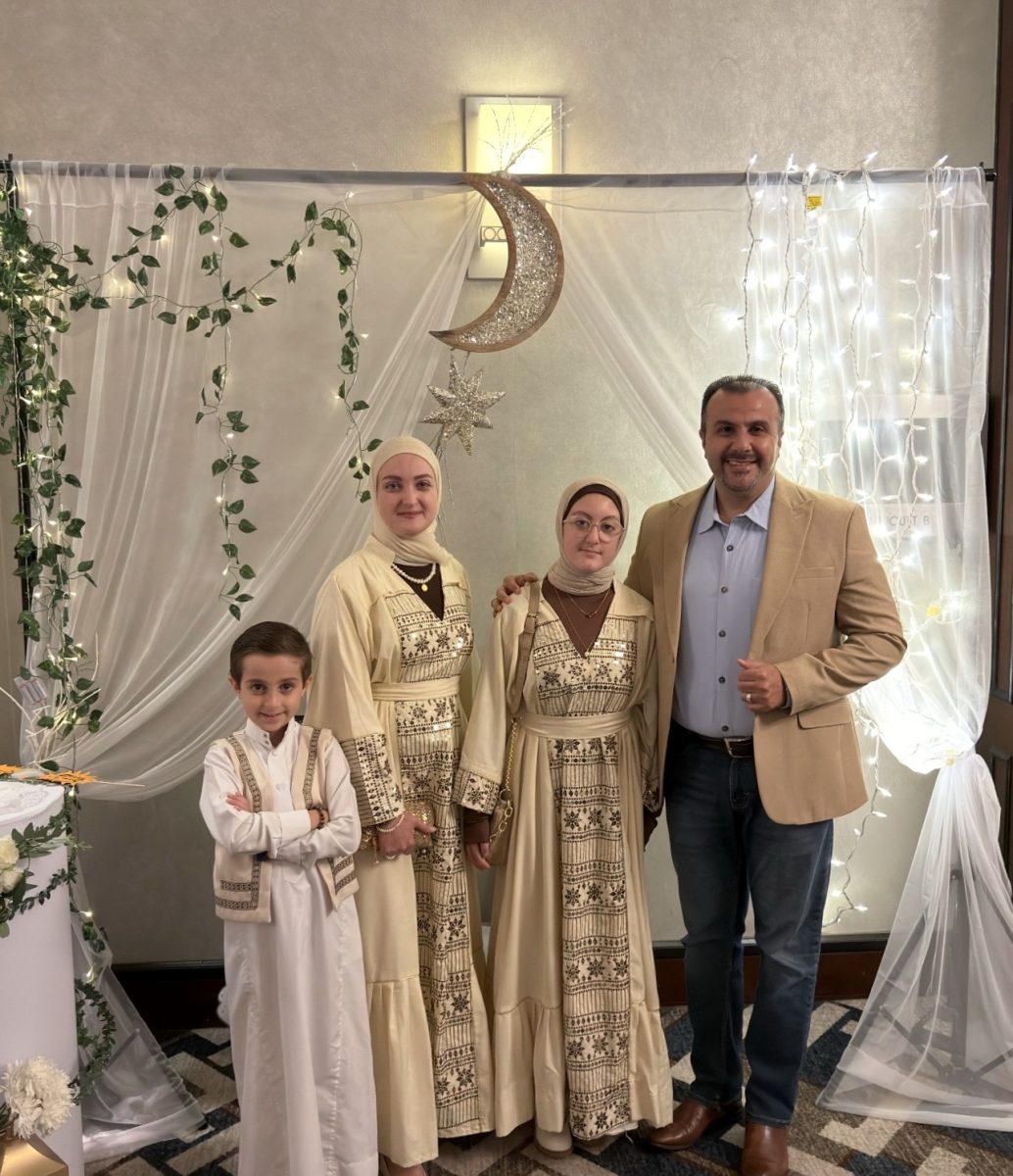
From all parts of the world, there exist millions of diverse cultures and religions with all sorts of ways to remain believing and hopeful. In Islam, there is a holiday like no other–Eid Al-Fitr.
Eid Al-Fitr, also known as Eid, is the holy celebration held after Ramadan, a sacred Islamic month during which Muslims fast from dawn to dusk for 30 days. Also, during Ramadan, Muslims use the month to pray, practice good deeds and grow closer to God.
Islam follows the lunar cycle to keep count of its months. This year, the first day of Ramadan fell on February 19th, and Eid fell on March 20th, or the first of the Islamic month of Shawwal.
On the morning of Eid, families break their fast and practice Zakat Al-Fitr, which is a mandatory charity distributed to the poor and needy before the Eid Al-Fitr prayer. Children receive money from their family members and friends, exchange gifts and all go to the Mosque to pray together.
A few days before Eid, people travel to Mecca, Saudi Arabia, to practice Hajj, a religious pilgrimage. On the day of Eid, Muslims have to circumambulate the Kaaba seven times, visit the sacred mountains of Safa and Marwa, drink the holy Zamzam water and pray towards the Kaaba, as all Muslims around the world do.
If Muslims are unable to visit Mecca, they pray for the opportunity to go in the future; every Muslim is required to visit Mecca once in their life.
The traditional Eid Al-Fitr clothing is different for men and women. Women wear long, designed, detailed and embroidered dresses called abayas or jallabiyas. They come in lots of colors, along with their scarves, or hijabs.
Men wear a white dress called thawb. It is a long-sleeve gown that reaches the ankle. Over the thawb, men wear a thin black-and-gold fabric called a bisht. Traditionally, men could also wear a kufiya, a headscarf that differs from a hijab. Men are not religiously required to wear a kufiya, as women are with their scarves.
Moreover, henna hand drawings are a renowned convention during Eid. Henna is a dye derived from the Lawsonia inermis plant, and it has a brownish-orange color when it is applied to the skin. There are so many different designs that can be put into one’s hands on the day of Eid.
One thing my family and I do the day before Eid is make date cookies called Maamoul. These cookies are made with the date fruit stuffed into them to make them sweet on the inside. On the day of Eid, we give them out to our friends and family members.
All in all, Eid Al-Fitr is a time of excitement and blessings, a special occasion for Muslims to gather and express gratitude. It’s like Thanksgiving and Christmas combined, because there are feasts, gifts and people dressed in traditional clothing!
