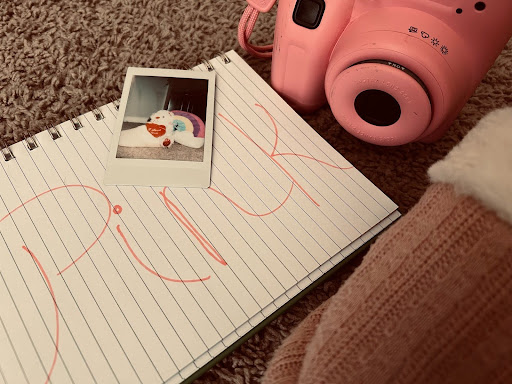
I, like everyone else, had to choose between dolls and baseballs, ballet and soccer, pink and blue. It didn’t take long for me to realize that it didn’t matter.
At school, the boys were never nice to me. I never saw it as boys vs. girls, but they did. “You’re a girl!” they would laugh. “You can’t play with us!” I didn’t understand why. Why did being a girl determine who I could and could not play with? I believed it was a weakness. Women are weak; I wasn’t—therefore, I wouldn’t act like a woman.
So I hated pink. If that is what separated me from boys my age, then I hated it.
My mom couldn’t understand that. She would dress me up in frilly pink dresses and shoes and tie my hair in swirls and tell me to “be a lady” when I did anything that was human. When I told her I didn’t want to wear dresses anymore, it aggravated her. “I always wanted a girl!” she would cry, “I finally got one and yet you hate pink!” I couldn’t ever win.
I masculinized myself. No more dresses, no more dolls, no more pink. The boys still wouldn’t let me play with them at recess. “You’re a girl!” they screamed and shouted. I couldn’t understand. I didn’t act like a woman anymore, so why would it matter? Until I realized that it was never about “weakness,” it was always about being a girl.
When I would sit alone in my room, defeated, I would look around. My carpet was pink, my walls were painted pink, and the poster on my wall of a female athlete winning a gold medal featured a pink tank-top. I didn’t hate pink, I loved it. Not because I was a woman and I was supposed to, but because I did. That didn’t make me weak; if anything, it made me stronger than ever.