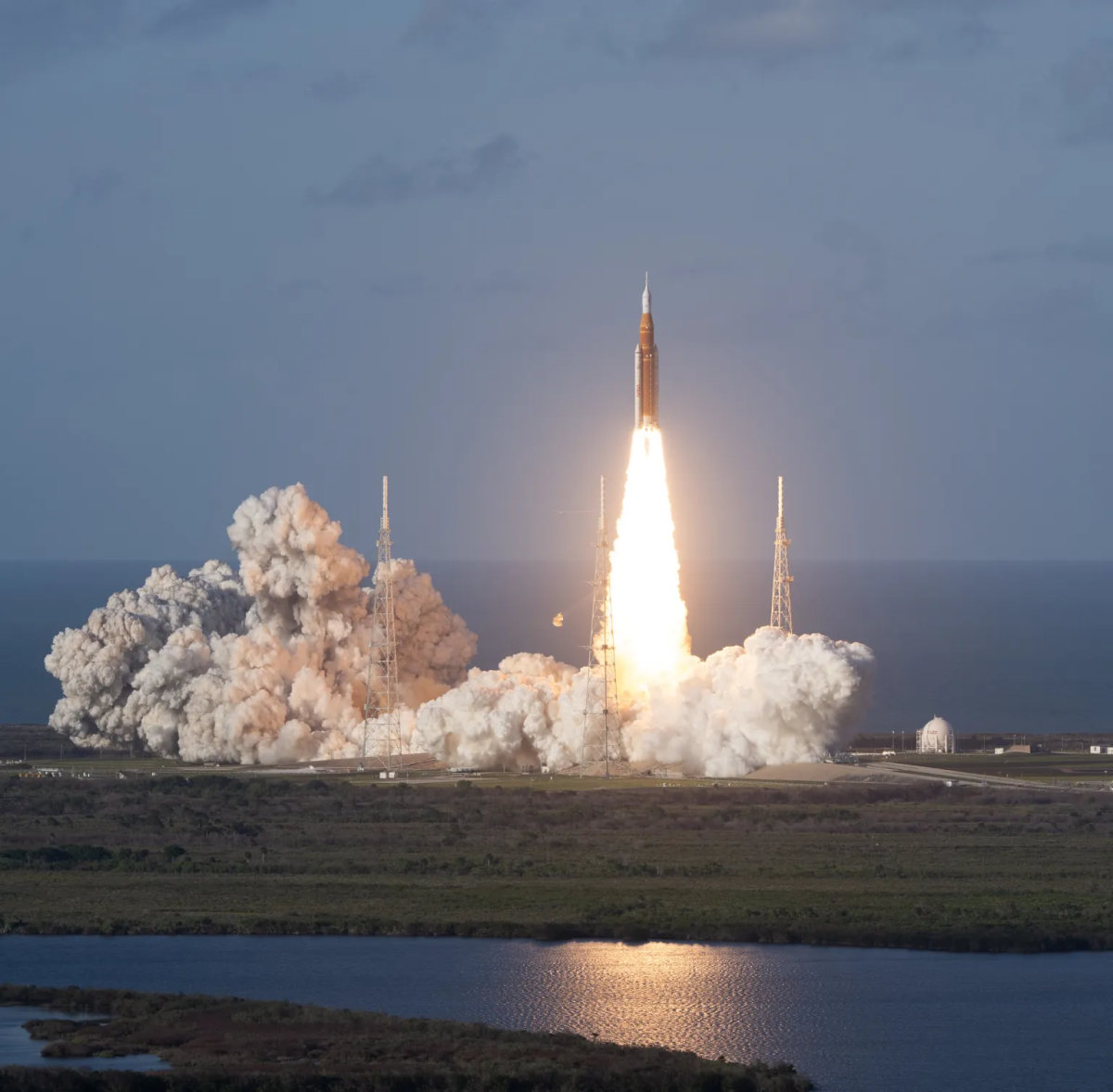
April 1 was a very special day for space lovers. In launch complex 39B at the Kennedy Space Center in Florida, NASA successfully launched a spacecraft at 6:35 p.m., carrying four passengers to the moon for the first time since the Apollo 11 mission in 1969.
The mission is known as Artemis II. Its goal is to send a test flight around the moon and come back, which is scheduled to take up to ten days according to NASA.gov. The four astronauts taking part in the mission are known as Commander Reid Wiseman, Pilot Victor Glover, and Mission Specialists Christina Koch and Jeremy Hansen. This marks the first time in 50 years that NASA has conducted a lunar flyby!
Furthermore, NASA has created a new wave of space travel. This is the first crewed flight that tests out the new Orion spacecraft. “Over the next ten days, Reid, Victor, Christina and Jeremy will put Orion through its paces so the crews who follow them can go to the moon’s surface with confidence,” says Amit Kshatriya, a NASA associate administrator.
According to IFLScience, what differentiates the Orion spacecraft from previous spacecraft models is the better technologies and increased safety. The previous spacecrafts, such as Apollo, had computers that ran on the same power as a modern calculator. The computers used in the Orion spacecraft, however, can hold 128 GB of memory and work way faster than the previous computers. This helps to lower radiation and increase data collection and power processing. There are also solar panels for power generation, in contrast to the fossil fuels used before.
There are also better appliances for the astronauts, such as better cooking appliances and toilets (the first toilet ever sent to space). This will also be the first time marked in American history where a woman and a person of color have orbited the moon.
According to NASA.gov, If the lunar flyby goes as planned, the astronauts will return to Earth on April 10 and land in the Pacific Ocean.
But the Artemis mission will be far from over. For the next few years, NASA plans on releasing more spacecraft models and satellites into Earth’s atmosphere under the Artemis mission. NASA’s long-term goal is to establish a sustainable presence on the moon to ensure a stepping stone for future missions and potentially even a crewed mission to Mars.