
“We can gain experience from the past, but we can’t relieve it; and we can hope for the future, but we don’t know if there is one.”
-George Harrsion, 1987
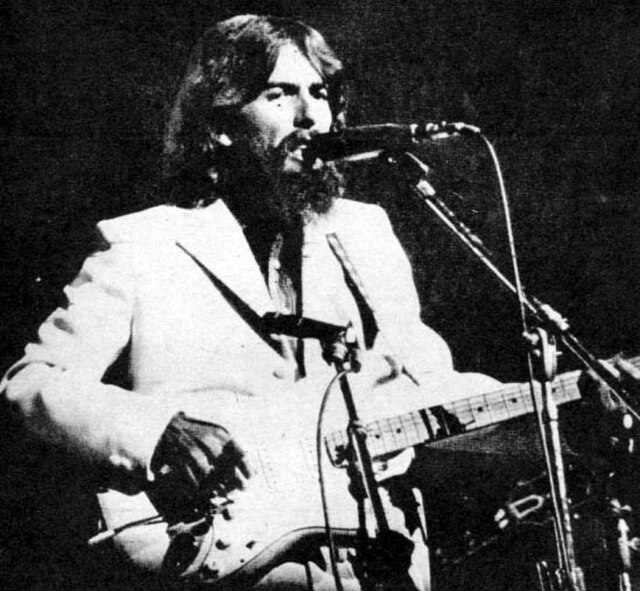
If you were to ask one about the most memorable Beatle, they’ll most likely say John Lennon or Paul McCartney without hesitation. But, George Harrison deserves a bigger spotlight, not only because of his musical talent, but also because his music reflected a basis of self-awareness that set him apart.
Before being known as the, “quiet beatle,” Harrison’s legacy began at only 14 years old when he was introduced to Lennon by McCartney. As the youngest member, he helped build the basis of the Beatles’ sound with his impressive guitar skills; still, as the band rose to fame, Harrison was often overshadowed by Lennon and McCartney, whose iconic image placed them at the spotlight and left Harrison in the background.
When asked about her opinion on the beatle, 11th grader Alexis Mir said, “I feel like he was the most underrated member and fans were more focused on John and Paul,” referring to how the public’s eye “was more focused on them rather than George.” Despite receiving less attention, Harrison still played an important role in the Beatles as he contributed to memorable songs like “Here Comes the Sun” in 1969.
Over time, Harrison began to establish his identity as more than the “quiet beatle.” He developed a unique musical voice, both through his songwriting and his involvement in cultural influences, specifically Hinduism. Drawing inspiration from Indian music and spirituality, Harrison helped introduce new instruments and ideas into the band’s work, expanding their sound beyond rock. Harrison’s contributions reflected a rising awareness of this eccentric sound, allowing him to stand out as a more thoughtful and experimental musician within the group.
“His way of being shaped him for the better by making him appear to be an emotionally vulnerable person who wrote his songs in real time,” noted Mir, highlighting the sense of emotional honesty that defined his work. This perspective shows the idea that Harrison channeled raw emotions that were thoughtfully intertwined within his music.
George Harrison’s solo career is one of the clearest examples of artistic maturity in music. As time passed, his music became more introspective and meaningful, filled with reflection, spirituality and raw emotional aspects that truly set him apart. You’re able to hear this maturity in his 1970 song, “My Sweet Lord,” where he opens about his faith and longing with a passion that resonates with sincerity. This shift didn’t just improve Harrison as a musician, but he was becoming an empathic person overall, someone whose emotional intelligence extended beyond music.
In retrospect, George Harrsion was never the quiet one–he was the conscience. While other members chased fame, Harrison searched for meaning, perceptions and something beyond fame. His music doesn’t force attention; it stays and waits, then hits you when you least expect it. There’s a rare honesty found in his songwriting that is timeless, as if it was written for anyone who’s ever felt out of place in loud atmospheres–and that type of legacy doesn’t fade.